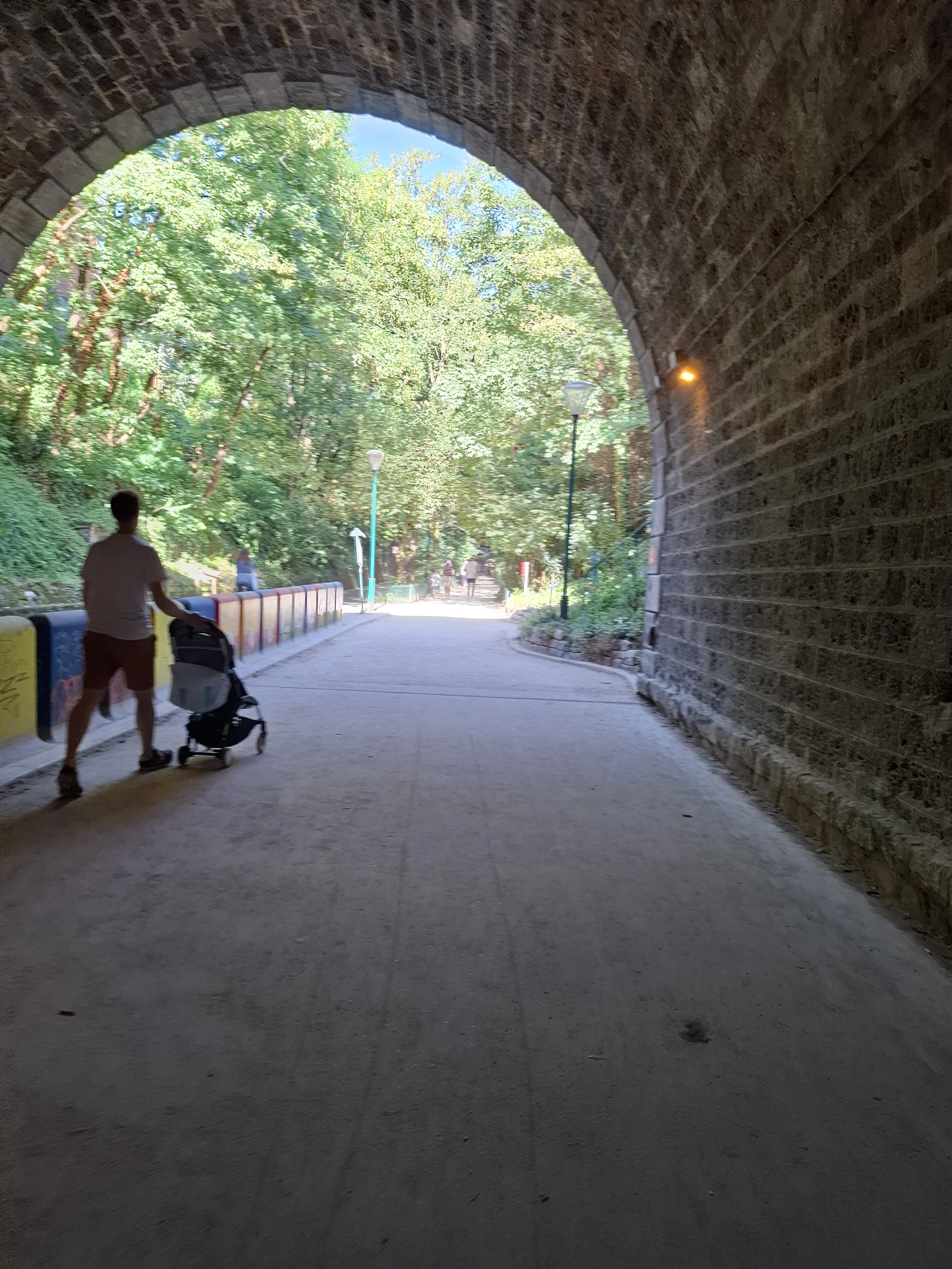
A green wonderland in Paris.
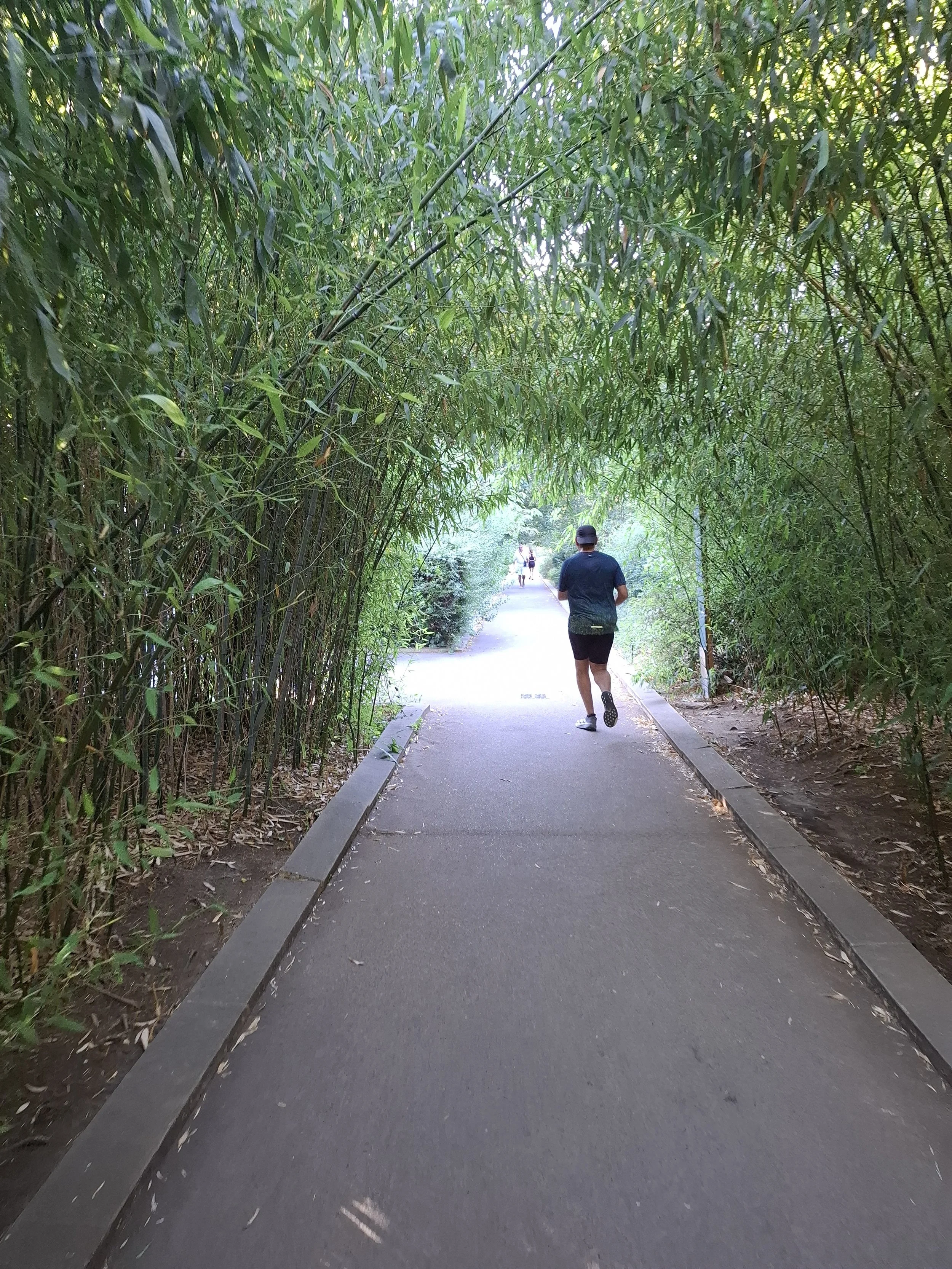
Early morning runners on the Coulée Verte
At Wave Consulting Australia, we spend a lot of time thinking about how water, greenery and public spaces come together to create healthier, more liveable cities.
Across Australia, communities are grappling with increasing temperatures, more frequent heatwaves, declining urban tree canopy and the need to create places that encourage walking, cycling and everyday interaction with nature.
One of the best ways to learn is by observing successful examples from around the world.
During a recent visit to Paris, I was fortunate enough to walk the entire length of the Coulée Verte René-Dumont. While New York's High Line often receives international attention, many people don't realise that the Coulée Verte was actually the world's first elevated linear park, opening in 1993 on a disused railway corridor. It has since become a model for urban regeneration projects around the world.
Stretching approximately 4.7 kilometres from near the Bastille to the eastern edge of Paris, the Coulée Verte transforms redundant railway infrastructure into an extraordinary green corridor that supports recreation, biodiversity and active transport while providing a cooler alternative to the surrounding streets.
The route is below (courtesy of All Trails).
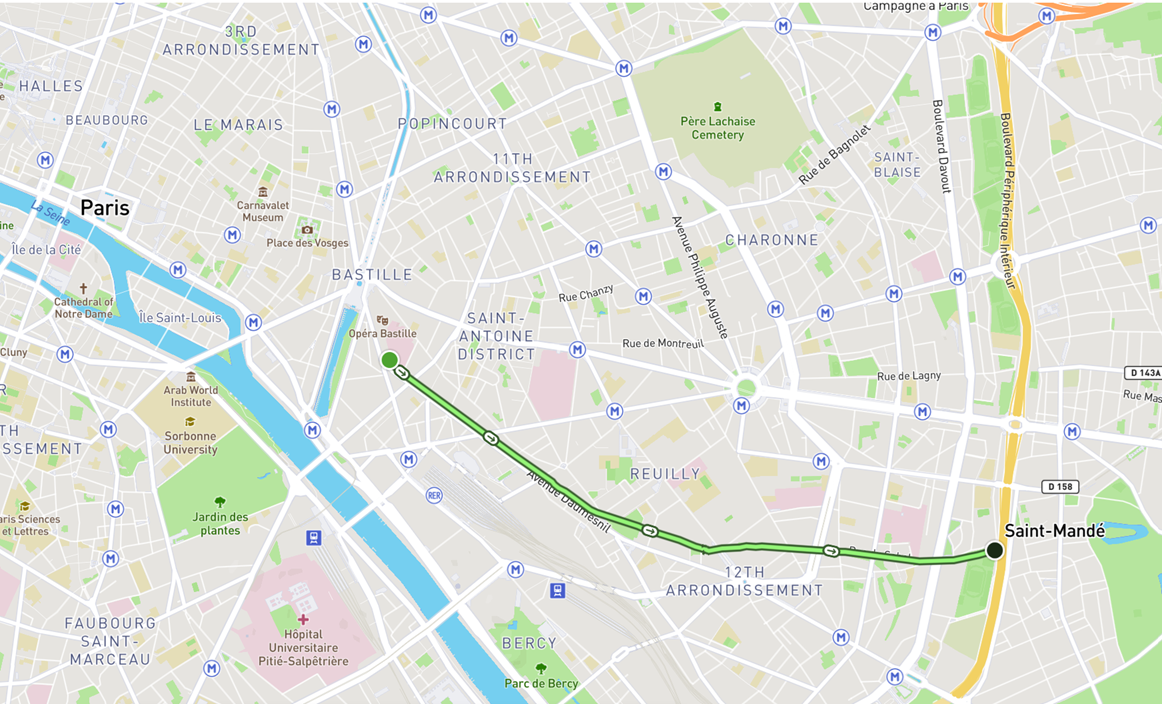
The Coulée Verte route in Paris’s 12th arrondissement
Heatwave
What made the experience particularly memorable was that Paris was in the middle of a significant summer heatwave. Walking the Coulée Verte early in the morning made the value of urban greening immediately obvious. While many surrounding streets appeared dry and exposed, the green corridor felt noticeably cooler, more comfortable and alive.
The difference was incredible.
There was an immediate sense that the combination of mature tree canopy, dense vegetation and ongoing irrigation had created its own microclimate. Even early in the day, the space offered genuine refuge from the heat.
As practitioners who regularly work on water-sensitive urban design, this reinforced an important lesson for us: successful green infrastructure isn't simply about planting trees. It's about providing the conditions that allow vegetation to thrive for decades, and including water!
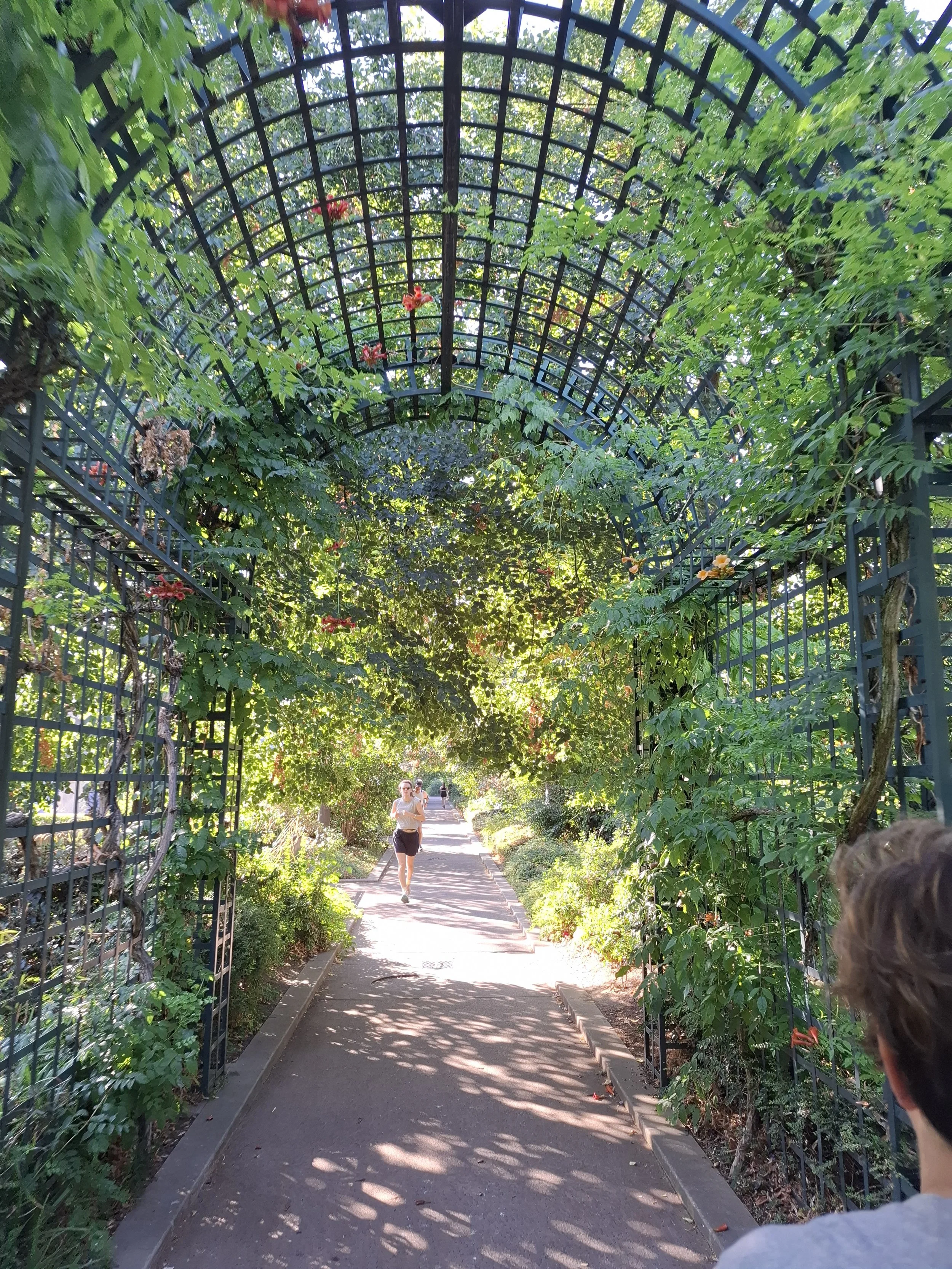
An ever changing walk (and plenty of soil and water)
One of the most impressive aspects of the Coulée Verte is that it never feels repetitive.
Rather than following a single design template for its entire length, the experience continually evolves.
The western section begins high above the surrounding streets on the former railway viaduct, providing unique views across Paris while visitors walk amongst mature trees and extensive planting. Further along, the route transitions to ground level before dropping below street level into former railway cuttings and tunnels. In other sections it passes through larger parks and landscaped open spaces before reconnecting with the old railway alignment.
This continual change creates a sequence of different experiences that keeps the journey engaging from beginning to end.
The planting palette also changes throughout the walk. Groundcovers, shrubs and flowering species provide seasonal variation, but the dominant feature is undoubtedly the mature tree canopy. Shade appears to have been a primary design objective, and during a heatwave its importance becomes impossible to ignore.
Looking at the size of these trees also raises an important engineering observation. Healthy mature trees require substantial soil volumes beneath the surface, and access to water. The success of the Coulée Verte suggests significant investment in creating suitable growing conditions rather than treating planting as a decorative afterthought.
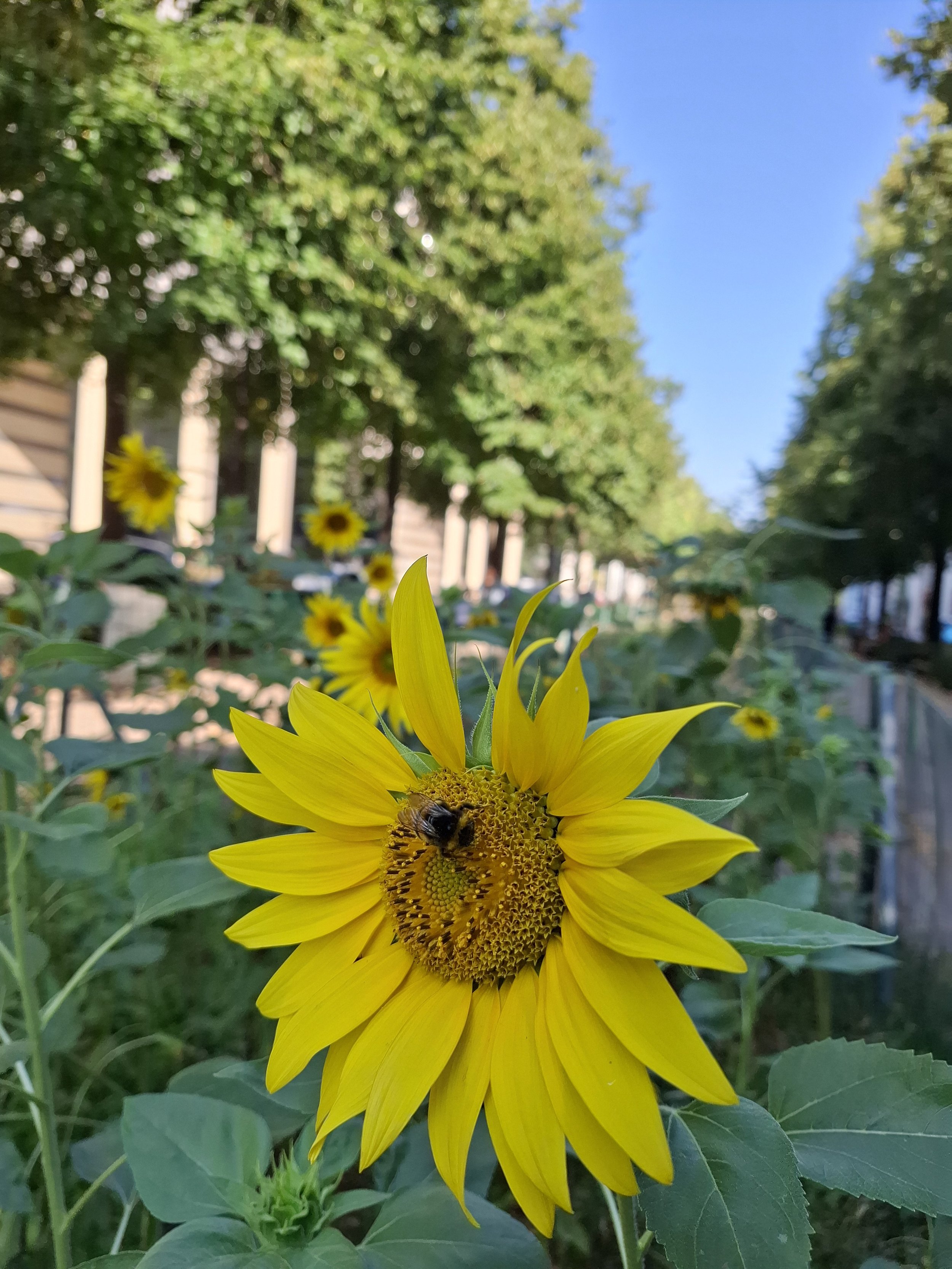
A field of sunflowers along the Coulée Verte René-Dumont
The role of water
Perhaps the biggest surprise was not simply the vegetation itself, but the level of maintenance it receives.
Throughout the morning there were numerous maintenance staff actively irrigating planting beds and managing vegetation. One section even incorporated a narrow linear water feature, creating another layer of visual interest and cooling.
Unlike many urban landscapes in Paris, that rely largely on passive rainfall, the Coulée Verte clearly benefits from active irrigation and ongoing maintenance.
Exactly where this irrigation water comes from wasn't obvious. It may utilise potable water, recycled water, harvested stormwater or another alternative supply. Without detailed information it would be inappropriate to speculate.
However, the source of the water is only part of the story.
The more important observation was that maintaining a high-quality green corridor requires an ongoing commitment to water management. During the surrounding heatwave, many nearby landscapes appeared dry and stressed. In contrast, the Coulée Verte remained lush, cool and inviting.
For Australian cities, this raises an important discussion. As we increasingly invest in urban greening, equal attention needs to be given to identifying sustainable long-term water supplies, and maintenance, that can support vegetation through extended dry periods.
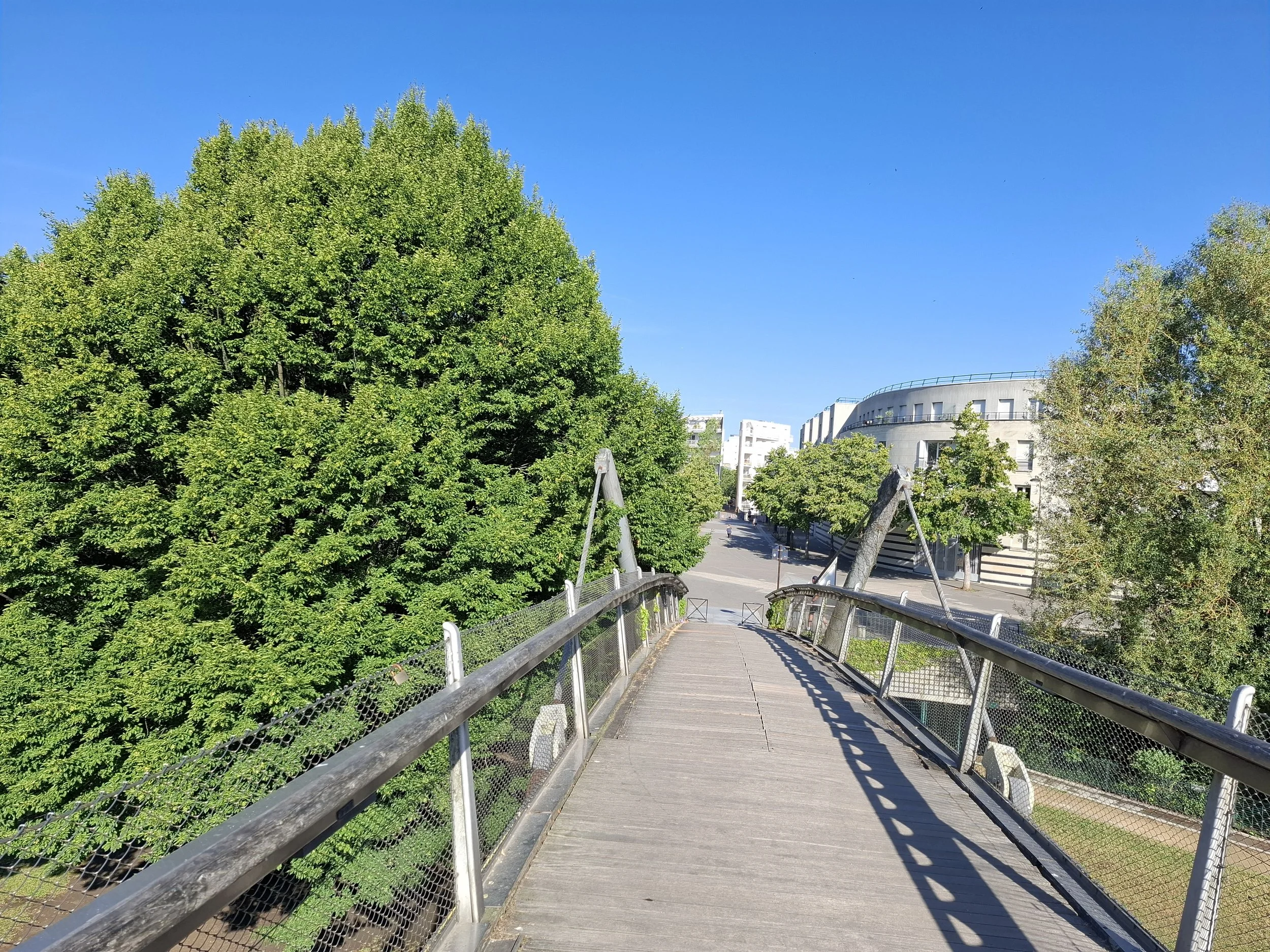
An overpass to connect different parts of the Coulée Verte René-Dumont
A path for everyone
The Coulée Verte succeeds because it isn't simply a tourist attraction. It functions as part of everyday Paris.
During the early morning, the predominant users were runners, walkers and commuters travelling through the city. Dog owners were making use of the extensive green space, while parents and carers walked with young children exploring the gardens and pathways.
Tourists were certainly present, but they were only one part of a much broader mix of users, and outnumbered by locals.
In many sections, pedestrians and cyclists each have their own dedicated corridors, reducing conflicts and creating comfortable movement for everyone. Seating is provided regularly, waste bins are plentiful and numerous stairways and access points connect surrounding neighbourhoods to the green corridor.
Rather than feeling isolated, the Coulée Verte is highly permeable. People can join or leave the route at many locations, allowing it to become part of everyday journeys rather than a destination requiring a special trip.
As the walk progresses, it also passes cafés, local shops and commercial areas, allowing people to stop for coffee or lunch before continuing their journey.
Only occasionally does the corridor widen into larger gathering spaces. For most of its length, it operates as a beautiful linear connector, encouraging movement while making the journey itself enjoyable.
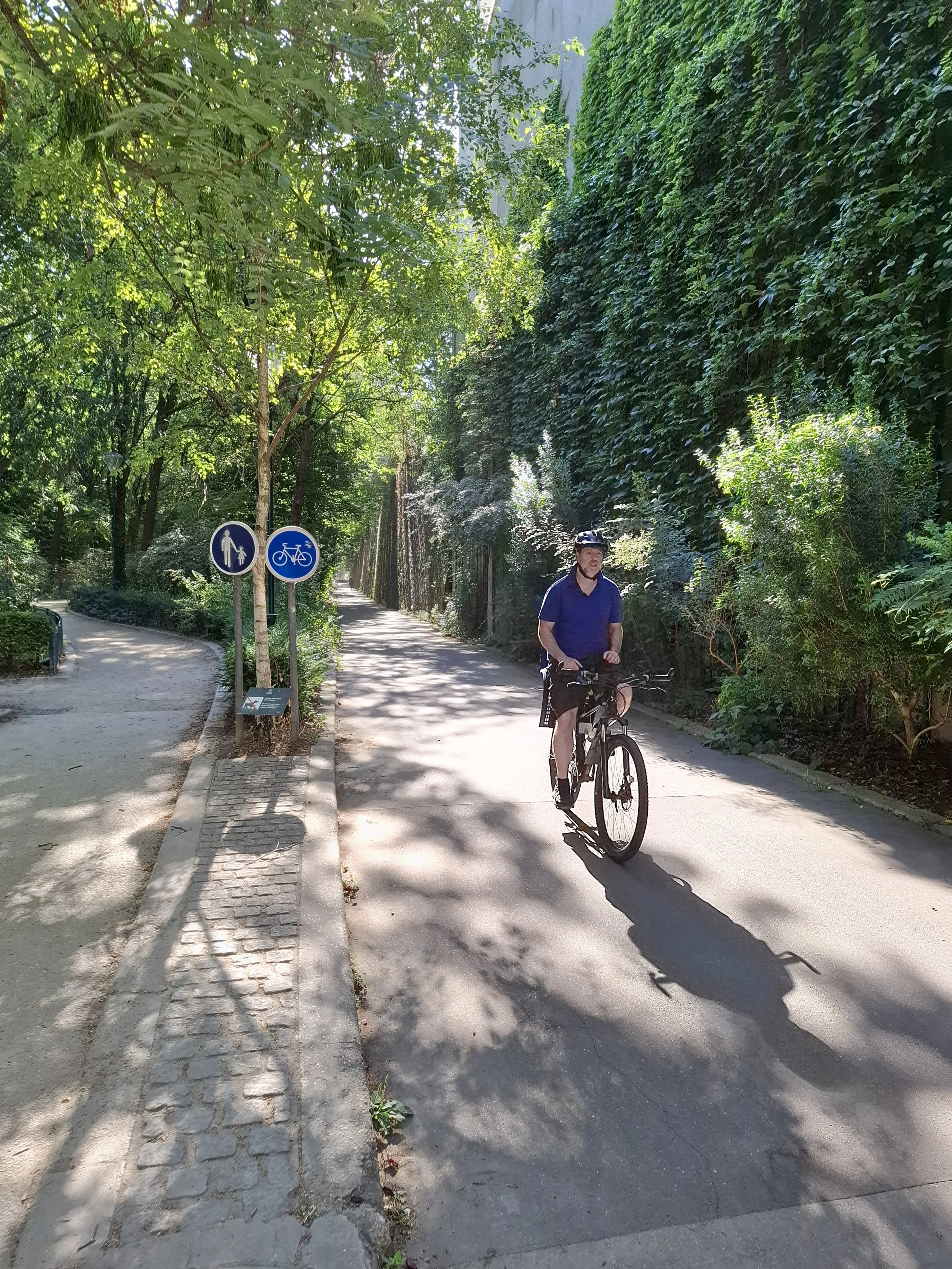
Some sections have separated walking and cycle pathways
Joined up
Perhaps the most important lesson is that the Coulée Verte doesn't operate in isolation.
It connects with parks, neighbourhoods, public transport and other walking and cycling routes across Paris. It forms part of a much larger blue-green network that enables people to move through the city using attractive, shaded public spaces rather than relying solely on busy streets.
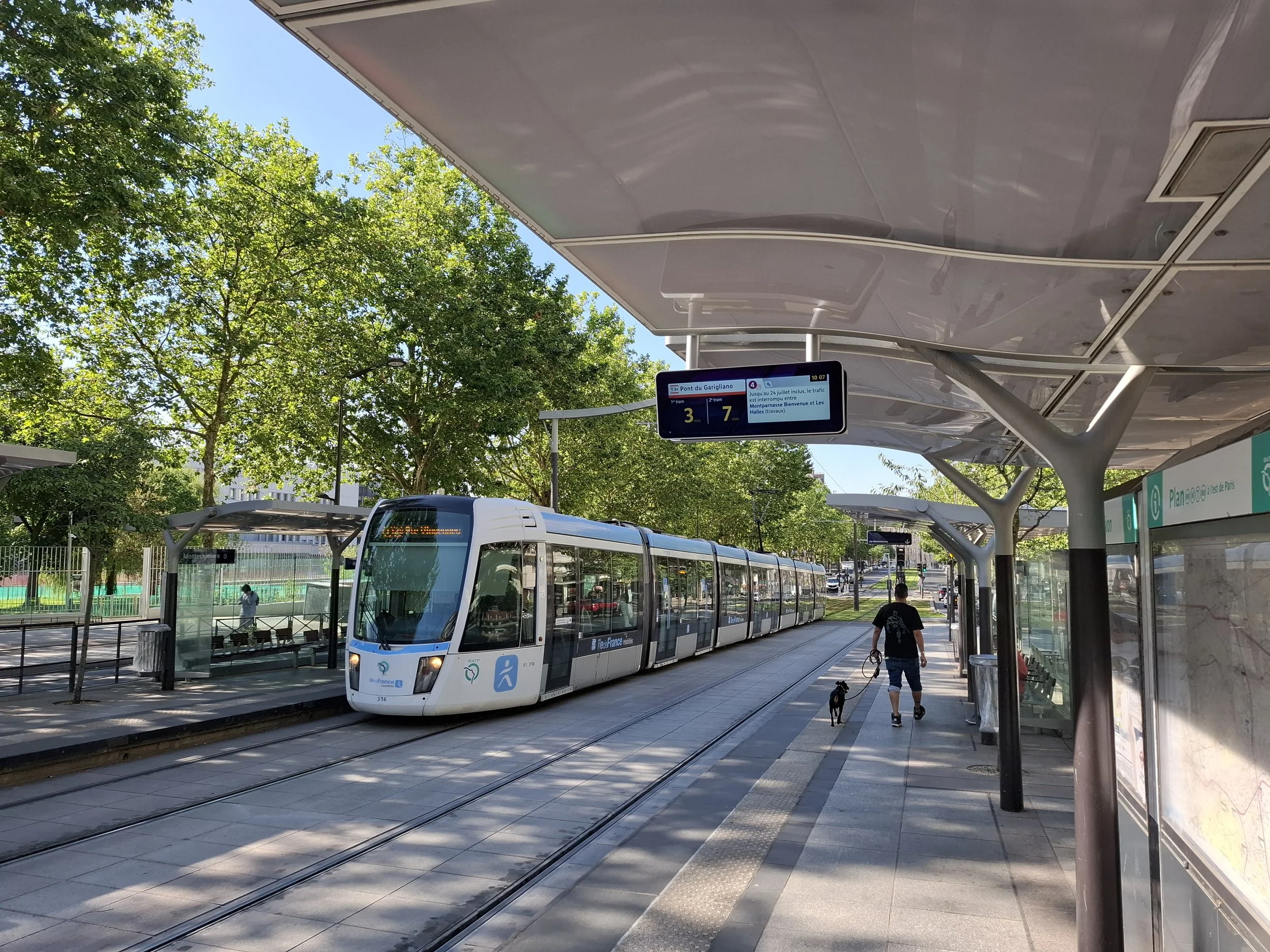
Public transport is readily available at both ends of the corridor and at numerous locations along its length, making it easy for residents and visitors to access different sections without needing to complete the entire walk.
This integration with the wider city is one of the reasons the space feels so successful.
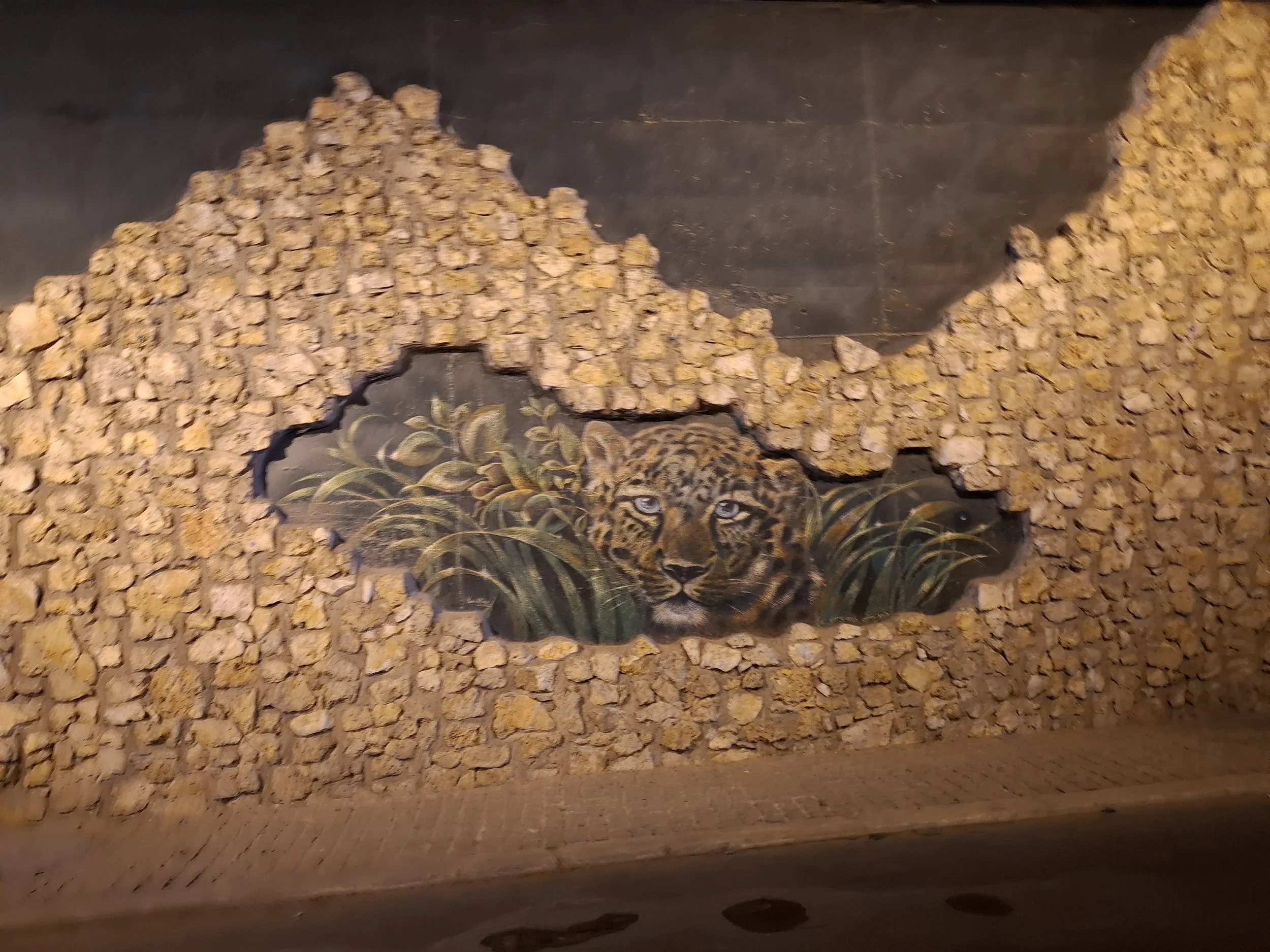
There is a lot of artwork along the Coulée Verte René-Dumont
So what does this mean for Australian cities
Projects like the Coulée Verte demonstrate that successful urban greening involves much more than planting trees. It requires long-term thinking about connectivity, soil volumes, water supply, maintenance, accessibility and how people actually use public space throughout the day.
Perhaps the most powerful lesson is that cities should be viewed as connected systems rather than collections of individual parks.
When green corridors link neighbourhoods, public transport, waterways and community destinations, they become part of everyday life. They encourage walking, support biodiversity, reduce urban heat and improve community wellbeing simultaneously.
As Australian cities continue adapting to a warmer climate, these integrated blue-green networks will become increasingly valuable. In fact it will be essential.
The Coulée Verte René-Dumont is more than a beautiful walk through Paris. It is a practical demonstration of what can be achieved when landscape architecture, urban planning, water management and long-term maintenance work together to create a city that is cooler, healthier and more enjoyable for everyone.
Please check it out if you are there. It’s cool!